
Brands are under constant pressure to create content. New posts. New videos. New emails. New ads. New stories. New proof that something is happening.
The problem is that content without a real-world moment behind it can start to feel thin. A product photo can be polished but forgettable. A campaign can be clever but detached. A feed can look active while the brand itself feels distant from its customers.
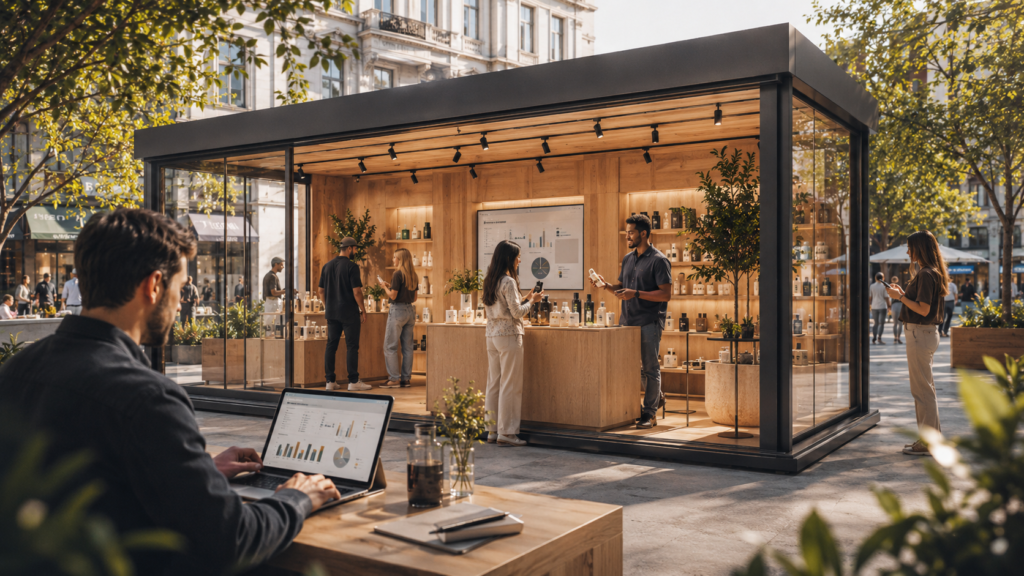
Physical retail can change that. A store, especially a short-term store designed around a specific moment, can become a content engine for the entire brand.
The Store Creates What the Studio Cannot
A studio can create beautiful images. A production team can create polished videos. But a physical retail experience can create something different: evidence of real customer engagement.
People walking in. Customers trying products. Friends reacting together. Staff explaining the story. A founder meeting early fans. A crowd forming around a launch. These moments are harder to manufacture because they are not just staged assets. They are interactions.
That kind of content carries a different signal. It shows that the brand exists in the world and that people are choosing to participate in it.
Flexible Retail Builds the Omnichannel Loop
The strongest retail strategies do not treat digital and physical as separate channels. They create a loop.
Digital marketing drives awareness. The physical activation creates deeper engagement. The content from the activation flows back into digital channels. Customer feedback informs future product decisions. Local demand data helps shape market strategy. Email signups, social follows, product questions, and event attendance all become part of the brand’s broader customer intelligence.
A temporary store can therefore deliver value far beyond sales made on-site. It can feed the entire marketing and customer insight system.
Content With a Place Feels More Believable
Customers are increasingly skilled at recognizing content that exists only to sell to them. That does not mean brands should stop marketing. It means the strongest marketing often needs something real behind it.
A physical activation gives a brand that anchor. Instead of posting only product renderings, lifestyle imagery, or promotional graphics, the brand can show a place people visited. It can feature customers, events, conversations, product demonstrations, community partnerships, and location-specific stories.
The result is content with context. The brand is not simply saying it has momentum. It can show momentum.
The Store Becomes a Media Asset
When designed thoughtfully, a short-term store can support multiple forms of media at once. It can create photography, short-form video, founder interviews, customer testimonials, event recaps, product education, live shopping content, press opportunities, and social proof.
This changes how brands should think about the economics of an activation. Sales still matter, but the value of the store should not be measured only by transactions during the lease term. A successful activation can generate content that continues to support acquisition, retention, investor storytelling, retail partnerships, and community building long after the doors close.
In that sense, the store is not just a place to sell. It is a production environment, community touchpoint, and brand proof point.
Where Popular Fits
Popular gives brands a flexible way to create physical moments worth capturing. A Popular store can act as a launch site, customer lab, event venue, and content source, all within a short-term retail format.
That matters because the most valuable brand stories often come from real interactions. Flexible retail gives those interactions a place to happen.
The store is not just another channel. Done well, it becomes the engine that powers the channels around it.